
The Girona coastline is world-renowned for its crystal-clear beaches, charming fishing villages and stunning rugged cliffs. However, beneath the surface of the Mediterranean lies a completely different and fascinating world. Talking about the underwater caves on the Costa Brava means discovering one of the best-kept secrets for diving and snorkelling enthusiasts. From submerged passageways to large caverns illuminated by magical backlighting, this destination offers some of the finest diving experiences in Europe.
f you are planning your next adventure holiday and want to explore these underwater temples, logistics and relaxation are essential. In this article, we reveal the best diving spots and how to plan the perfect getaway with GHT Hotels.
The Girona coastline is world-renowned for its crystal-clear beaches, charming fishing villages and stunning rugged cliffs. However, beneath the surface of the Mediterranean lies a completely different and fascinating world. Talking about the underwater caves on the Costa Brava means discovering one of the best-kept secrets for diving and snorkelling enthusiasts. From submerged passageways to large caverns illuminated by magical backlighting, this destination offers some of the finest diving experiences in Europe.
If you are planning your next adventure holiday and want to explore these underwater temples, logistics and relaxation are essential. In this article, we reveal the best diving spots and how to plan the perfect getaway with GHT Hotels.
Why explore the underwater caves on the Costa Brava?
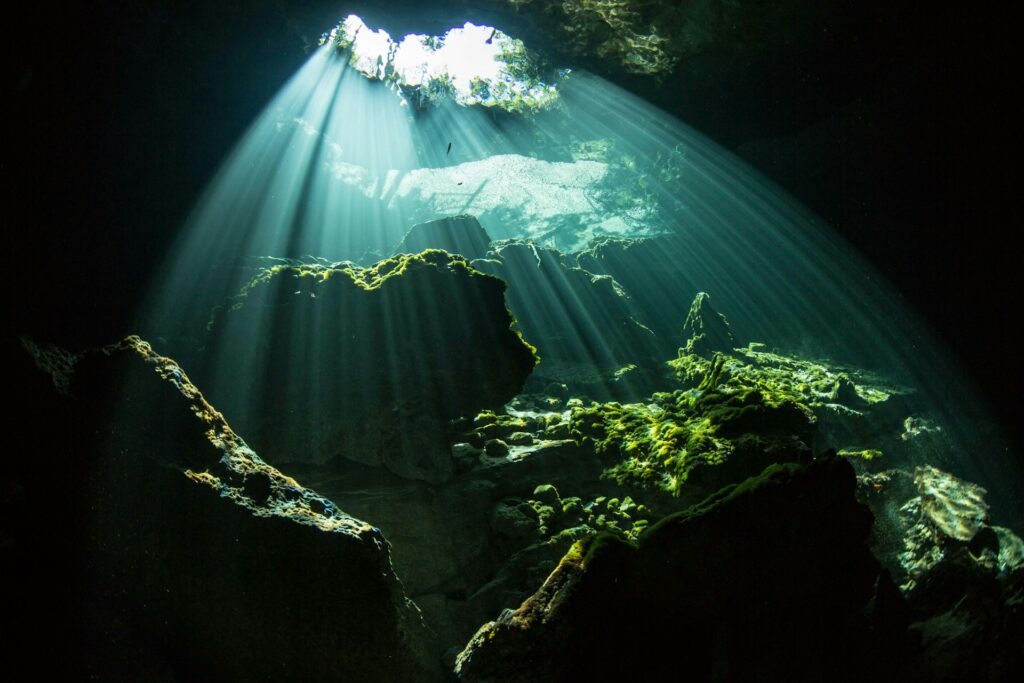
The geology of the Costa Brava, characterised by limestone rock and the constant erosion caused by waves and the Tramuntana wind, has created a unique underwater landscape. The region’s submerged caverns are not only visually spectacular thanks to the light effects filtering in from outside, but they also host extraordinary biodiversity.
As you venture into the underwater caves on the Costa Brava, you will have the opportunity to observe species that seek shelter in the semi-darkness:
- Marine life: Large groupers, conger eels, octopuses and spider crabs living among the crevices.
- Flora and coralligenous habitats: Walls covered with colourful sponges, jewel anemones and the precious red coral (Corallium rubrum), one of the jewels of these waters.
- Light spectacle: The clarity of Girona’s waters allows sunlight to create stunning visual effects as it reflects through the cave entrances.
A crucial warning: Entering confined or semi-confined underwater environments is not an activity to be taken lightly. To explore these caverns safely, it is essential to be accompanied by certified professionals and to use specific, well-maintained technical equipment.. The Costa Brava is home to excellent local dive centres that know every cave in detail and provide the right equipment to ensure a safe experience.
The best diving spots and caves along the Girona coastline
The extensive coastline offers options both for experienced divers who are comfortable with technical dives and for enthusiasts who prefer exploring more accessible caves or snorkelling in shallow caverns.
-
Túnel de la Sirena and the Medes Islands Caves (L’Estartit)
Although technically part of a protected marine reserve, the Medes Islands area features some of the most famous cave and tunnel formations in the Mediterranean. Túnel de la Sirena and Cova de la Vaca are wide passages illuminated by natural light at both ends, making them ideal for intermediate divers wishing to experience the sensation of crossing through a mountain beneath the sea.
-
Cova d’en Gispert (Begur – Palafrugell)
This is one of the longest underwater caves on the Costa Brava, stretching nearly 150 metres. It can be explored by kayak or snorkelling in its initial section, as the entrance is at sea level, while divers can descend further to explore its inner galleries. At the end of the cave lies a small hidden sandy beach where silence reigns supreme.
-
The caves of Tossa de Mar: Accessible and full of life
For those looking for easy shore dives, Tossa de Mar is a paradise. Areas such as Mar Menuda and the tunnels of Cala Bona offer small cavities and passageways at moderate depths (between 12 and 22 metres), perfect for cave diving introductions or underwater photography.
Plan your route: Where to stay with GHT Hotels
To make the most of your diving and exploration days, you need accommodation that guarantees comfort, excellent road connections and the peace of relaxing in an idyllic setting. GHT Hotels has a network of strategically located establishments along the coastline, allowing you to create a tailor-made diving route.
Tossa de Mar and Lloret de Mar: Seafaring Tradition and Top Diving Centres
Staying in the southern Costa Brava is one of the smartest choices for divers.
- Lloret de Mar: GHT hotels in Lloret provide an exceptional base for diving enthusiasts. The town boasts first-class diving facilities, with daily boat trips to rocky reefs and submerged channels teeming with marine life. After a day beneath the waves, Lloret offers a wide range of leisure activities and excellent dining options.
- Tossa de Mar: GHT hotels in this medieval town allow you to walk directly to local dive centres located on Platja Gran or Mar Menuda. After a day exploring the underwater caves on the Costa Brava, nothing compares to strolling through the walled Vila Vella or relaxing by the hotel pools.
Platja d’Aro and S’Agaró: Connectivity and premium comfort
If you prefer travelling along the coastline to visit different dive centres, from Blanes to Cap de Creus, Platja d’Aro and S’Agaró are ideal choices. Their central location on the Costa Brava reduces travel times considerably. Furthermore, GHT Hotels in these destinations offer extensive facilities, ideal for storing diving equipment comfortably and enjoying excellent gastronomy to recharge your energy.
Safety tips for cave diving
Exploring confined underwater spaces requires preparation and respect. If you plan to visit the underwater caves on the Costa Brava, keep these recommendations in mind:
- Always dive with a local guide: Local dive centres know the currents, tides and exact layout of each cave.
- Appropriate certification: Ensure your qualification (Open Water, Advanced or cave/tunnel speciality) matches the depth and difficulty of the dive.
- Maintain good buoyancy control: Many cave floors consist of fine sediment. A poor fin kick can stir up the bottom and reduce visibility to zero within seconds.
- Respect the environment: Do not touch cave walls. Red coral and sponges take decades to grow and are extremely fragile.
Summer is best experienced beneath the sea
The Costa Brava is beautiful above the surface, but its true treasures lie beneath the blue waters. Exploring the underwater caves on the Costa Brava transforms an ordinary holiday into an unforgettable adventure.
Don’t just hear about it. Book your stay in advance through the official GHT Hotels websitesecure the best rates of the season and get ready to dive into a world of light, rock formations and marine life. The wildest side of the Mediterranean is waiting for you!
This post is also available in: