
Some landscapes are visited and others are read. The coastline stretching from the Maresme to the Baix Empordà belongs to the latter: here, among pine-fringed coves, dry riverbeds, cemeteries with views and villages that belonged to fishermen before they belonged to holidaymakers, much of contemporary Catalan literature was written —along with some of the most influential pages of recent Latin American fiction.
It is no coincidence. The Catalan coast offered several generations of writers three things that are difficult to find together: a very particular light, a social world undergoing rapid transformation (from fisherman to tourist, from cork factory to holiday apartment) and just the right distance from Barcelona. Close enough not to miss anything; far enough away to be able to observe.
We suggest four itineraries for exploring this map with a book in your backpack. You can do them over four weekends or link them together from south to north on a several-day route following the coastline.
Josep Pla in Palafrugell: landscape as a craft
Where: Palafrugell, Calella, Llafranc, Tamariu, the Sant Sebastià lighthouse and Llofriu (Baix Empordà).
If anyone turned the Empordà into literature, it was Josep Pla. He was born in Palafrugell in 1897, in a house on Carrer Nou that is now home to the Fundació Josep Pla, and devoted thousands of pages to describing, with a craftsman’s obsession, what lay before him: the exact colour of the sea in mid-morning, the character of a boat skipper, the taste of an onion. The Gray Notebook remains the best place to start.
In 1993, the Fundació Josep Pla designed what is considered the first literary route in Catalonia, and it has continued to grow ever since. The classic route begins at Pla’s birthplace and Plaça Nova —with the Centre Fraternal and the Círcol Mercantil, the village’s two social hubs— before heading towards the coast through Tamariu, the Sant Sebastià lighthouse (where the young Pla made his first attempts at writing), Llafranc and Calella, including Canadell and Port Bo, and ending at Llofriu cemetery, where he is buried.
Practical tip: start at the Fundació to pick up the route folder and visit the permanent exhibition. The full route can be completed in one long morning or stretched over an entire weekend. There are also themed itineraries around Calella, Llofriu, the lighthouse and the Cap Roig gardens.
What to read beforehand: The Gray Notebook, Salt Water.
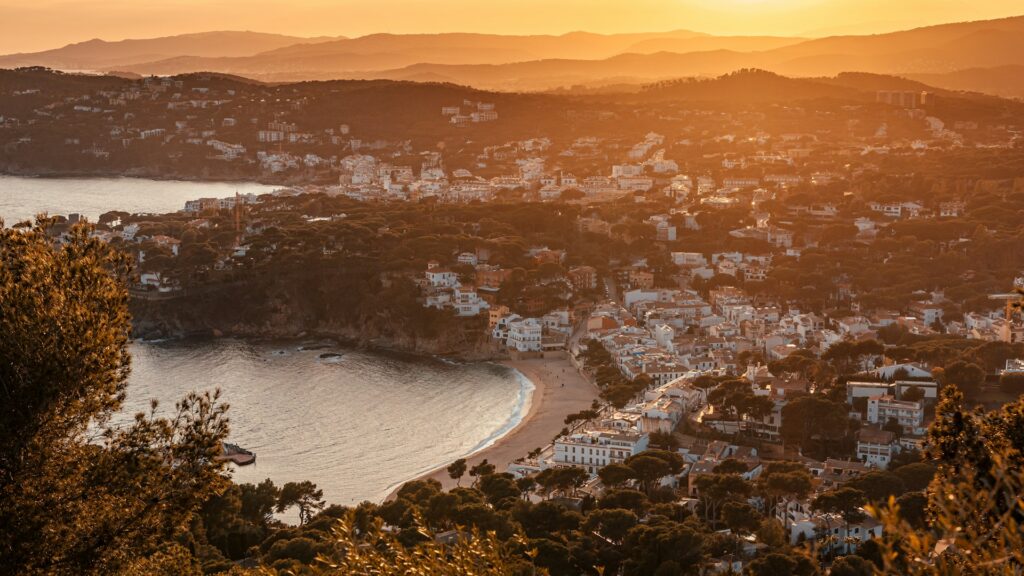
Roberto Bolaño in Blanes: the Mediterranean as a refuge
Where: Blanes (La Selva), gateway to the Costa Brava.
In 1985, a Chilean writer in his early thirties arrived in Blanes with the idea of opening a costume jewellery shop. He stayed for almost two decades, wrote the bulk of his work here —The Savage Detectives, 2666— and died in 2003, just as fame was beginning to catch up with him. Bolaño described Blanes as “a paradise without fanfare”, and that mixture of provincial normality and open sea runs throughout his writing.
In 2013, to mark the tenth anniversary of his death, the Town Council opened the Roberto Bolaño Route: 17 locations marked by posts and accompanied by quotations from the author, taken from novels, articles and interviews. It is a deliberately anti-heroic route —bookshops, bars, the premises where the shop once stood, the county library, the seafront promenade, Sant Joan Castle— because the Bolaño myth was built precisely there, in everyday life.
Practical tip: the route booklet is available from the tourist office and the Biblioteca Comarcal, which also has a Sala Bolaño created as a result of a local community initiative. The route takes a couple of hours on foot. Blanes is well connected to Barcelona by train.
What to read beforehand: The Savage Detectives; for those short on time, the stories in Llamadas telefónicas.
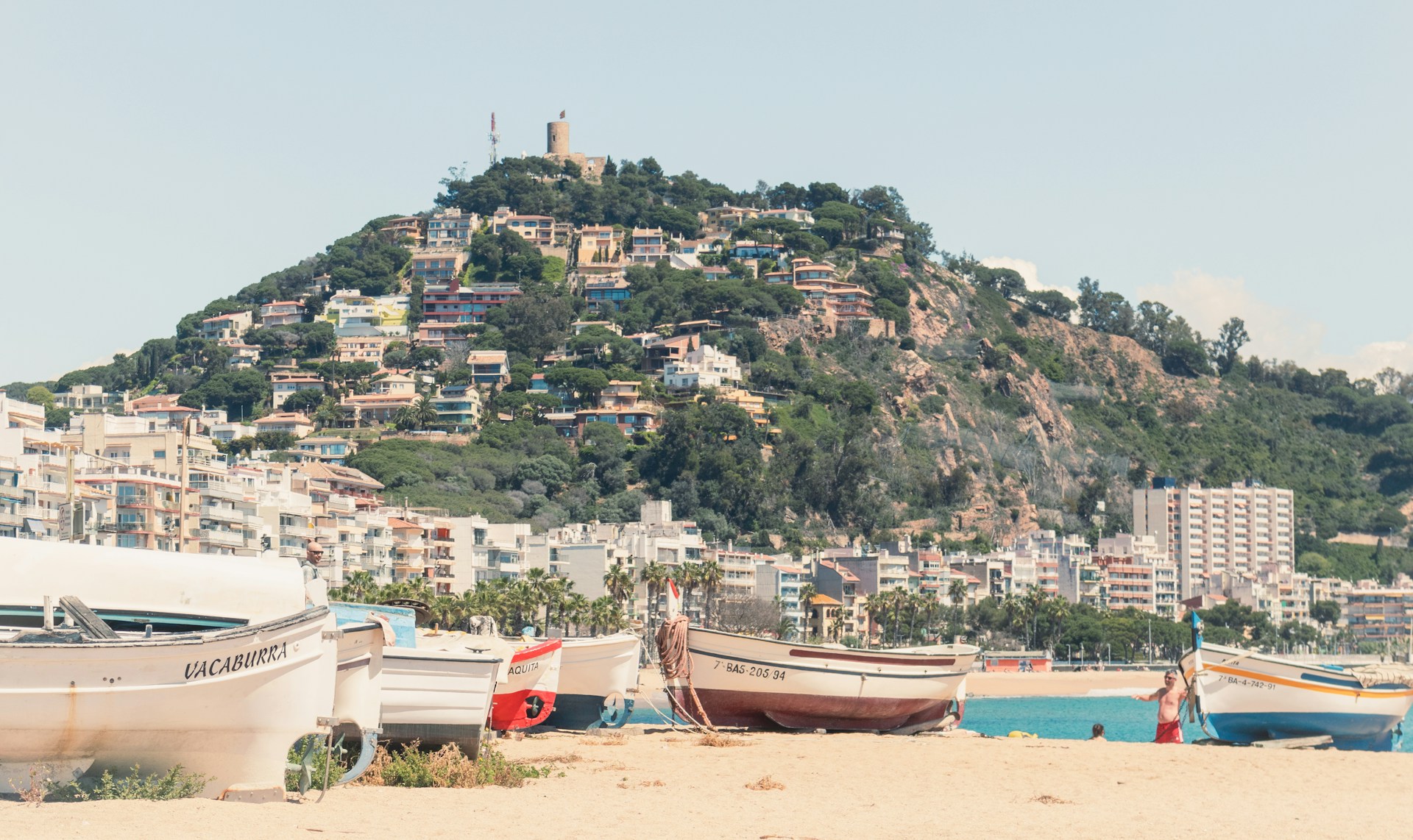
Salvador Espriu in Arenys de Mar: the lost paradise is called Sinera
Where: Arenys de Mar (Maresme).
Espriu was not born in Arenys —he was born in Santa Coloma de Farners in 1913— but his family came from there, and he spent his childhood and teenage summers there. From this connection emerged one of the great myths of Catalan literature: Sinera, which is simply “Arenys” read backwards and which, in his work, serves as a symbol of a lost world of happiness. The approach is radical: not to describe a village, but to invent an entire country from it.
The Espriu literary route, created by the Centre de Documentació i Estudi Salvador Espriu, begins at the Casa de la Vila and heads up the Riera to the poet’s neighbourhood: the house of his maternal uncles —the French prints in one of its rooms inspired The Story of Esther—, the family home on Carrer Bisbe Català and the Mal Temps hill where he played as a child. The final stop is inevitable: Arenys cemetery, at the top of the Turó de la Pietat, one of the most beautiful in Catalonia, with its grand tombs built by fortunes made in the Americas and its views of the sea. It is the heart of Sinera Cemetery (1946) and also the place where the poet is buried.
Practical tip: combine it with the Arenys route dedicated to the indianos, which shares several stops and explains where the money that built the town came from.
What to read beforehand: Sinera Cemetery, La pell de brau.
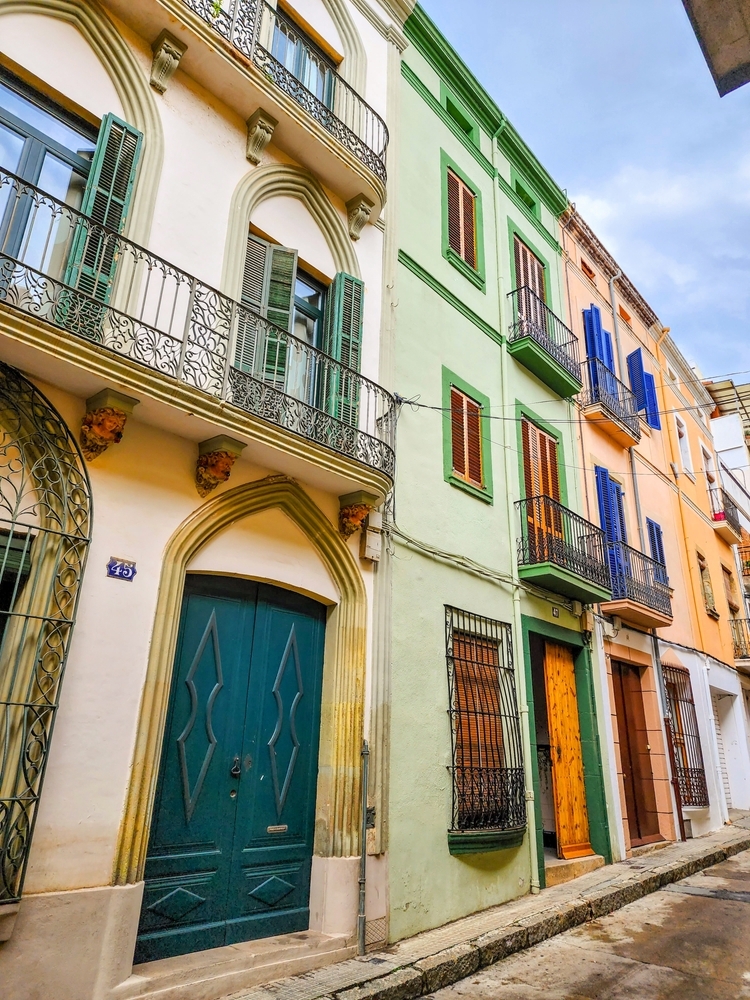
Mercè Rodoreda: gardens by the sea
Where: Romanyà de la Selva (Baix Empordà), in the Gavarres, just a short distance from the coast.
Rodoreda is, first and foremost, a writer of Barcelona. But her final years —and some of her most liberated books— belong to Romanyà de la Selva, the village in the Gavarres where she finally had a home of her own, “El Senyal”, and where she finished A Broken Mirror and wrote War, So Much War and Journeys and Flowers. The landscape of holm oaks, dolmens and gardens inhabits these books in an almost physical way.
Santa Cristina d’Aro Town Council and the Consorci de les Gavarres maintain a literary itinerary through a dozen locations around the village, ending at Romanyà cemetery, very close to the Cova d’en Daina dolmen, where she is buried.
The connection with the Maresme also exists, although it is more indirect and more literary: Rodoreda’s maternal family came from the area, and Garden by the Sea —the novel about an old gardener observing six consecutive summers at the villa of a wealthy Barcelona family— is set in a coastal town that is never named but that critics have traditionally placed in the Maresme. Walking past the old summer houses of Barcelona’s bourgeoisie between Caldes d’Estrac and Canet is, in a way, like walking through the setting of that book.
What to read beforehand: Garden by the Sea, A Broken Mirror.
How to link them together
From south to north, the coastline naturally puts them in order: Arenys de Mar (Espriu) → the Maresme and its summer villas (Rodoreda glimpsed out of the corner of your eye) → Blanes (Bolaño) → Palafrugell and Romanyà (Pla and Rodoreda). Arenys and Blanes are both easily reached by local train from Barcelona; for the Baix Empordà, travelling by car is advisable.
And one recommendation that applies to all four: read before you go, not afterwards. These towns and villages do not necessarily impress at first sight. What turns a cemetery with a view or an ordinary bar on the seafront into something memorable is having read about them first.
This post is also available in: